
Call us now :08071780022
 Send Inquiry
 Send Inquiry
Class 3 Quartz Sand
Class 3 Quartz Sand Specification
- Shelf Life
- 5 Years
- Boiling point
- 2230C
- Melting Point
- 1710C
- Purity
- >99%
- Packaging Type
- Sealed Plastic Jar
- Density
- 2.65 Gram per cubic centimeter(g/cm3)
- Usage
- PP Test Dust, test dust for evaluation, reference material
- Molecular Formula
- SiO2
- Physical State
- Solid
- Size
- Class-3 (as per JIS Z 8901 Micro-particle standard)
- Storage Instructions
- Store in a sealed container, in a dry and cool environment
- Ph Level
- 7 (neutral)
- CAS No
- 14808-60-7
- Molecular Weight
- 60.08 g/mol
- Grade
- Class 3
- Type
- Quartz Sand
- Application
- Test Contaminant, Laboratory Testing, JIS Z 8901 Compliance
- Appearance
- Fine powder
- Purity(%)
- >99%
- Insoluble in Water
- Yes
- Handling Precaution
- Handle with care, avoid inhalation
- Container Material
- High-Density Polyethylene (HDPE)
- Form
- Particle Powder
- Standard
- JIS Z 8901
- Color
- White
Class 3 Quartz Sand About
JIS Z 8901 Class 3 Quartz Sand is a laboratory-grade silica sand classified under the Japanese Industrial Standard (JIS Z 8901). It is used primarily for testing, calibration, filtration media evaluation, and particle size distribution analysis.
This quartz-based material is chemically stable, dry, and free from organic impurities. Its particle size distribution is tightly controlled to meet the requirements of Class 3 grading, as specified by JIS. Its suitable for testing in civil engineering, filter development, concrete labs, and geotechnical simulations.
Applications
-
Filter Media Testing
-
Calibration of Particle Size Equipment
-
Soil and Geotechnical Testing
-
Water Filtration and Drainage Simulation
-
Civil Engineering Material Studies
-
Cement & Concrete Fineness Testing
Test powders Class 7, Class 8, and Class 11 the quality of test powders Class7, Class 8, and Class 11 (KANTO LAOM) shall conform to the following items.
Particle Density: Particle Density shall be te value of 2.9 g/cm3 to 3.1 g/cm3 when measured according to the method in test
FAQs
Q: What are Japanese Industrial Standard test powders used for?
A: They are used in dust separation tests, air filter function tests, wear tests, and other industrial evaluations.
Q: What is the specified particle density for Class 7, Class 8, and Class 11 test powders?
A: The particle density must be within the range of 2.9 g/cmi to 3.1 g/cmi, measured according to the designated method.
Q: Can these test powders be used for calibrating automatic particle counters?
A: Yes, the test particles are specifically designed for calibrating light-scattering automatic particle counters and assessing high-performance air filters.
Q: What standards do Class 7, Class 8, and Class 11 powders conform to?
A: They conform to Japanese Industrial Standards, ensuring precision and reliability for various testing applications.
Q: Are there specific industries where these powders are essential?
A: Yes, they are widely used in industries such as air filtration, automotive testing, environmental monitoring, and laboratory research.
High-Purity Quartz Sand for Laboratory Excellence
Engineered for precision and reliability, JIS Z 8901 Class 3 Quartz Sand offers a purity level of 99%. This powder-form chemical is widely used in laboratories for critical testing and calibration. Its stable nature under dry, sealed storage conditions reduces contamination risks and ensures longevity, supporting accurate and repeatable results across various industrial processes.
Manufactured and Exported from India
Produced and supplied in India, this quartz sand aligns with JIS Z 8901 Class 3 specifications, guaranteeing international quality standards. As both a manufacturer and exporter, the company ensures the product's availability for domestic and global markets, making it an accessible solution for laboratories and industries worldwide.
FAQ's of JIS Z 8901 Class 3 Quartz Sand:
Q: How should JIS Z 8901 Class 3 Quartz Sand be stored for optimal stability?
A: This quartz sand should be stored in a dry, sealed environment to maintain its stability and high purity. Proper storage prevents moisture absorption and contamination, ensuring its long shelf life and consistent performance in laboratory settings.Q: What are the typical applications of this laboratory-grade quartz sand?
A: JIS Z 8901 Class 3 Quartz Sand is primarily used for industrial testing, analytical procedures, and as a calibration standard in laboratories. Its high purity makes it suitable for demanding quality control and research applications across various industries.Q: When is it recommended to use a 99% purity quartz sand like this product?
A: This high-purity quartz sand is recommended whenever precision and minimal contamination are essential, such as during trace element analysis, calibration of testing equipment, and standardized industrial procedures.Q: Where is this quartz sand commonly exported and supplied from?
A: The product is both manufactured and exported from India. It is supplied to laboratories, research institutions, and industrial clients worldwide, owing to its compliance with JIS Z 8901 Class 3 specifications.Q: What is the process for utilizing this quartz sand in laboratory tests?
A: For laboratory usage, the quartz sand should be handled with clean tools in a controlled environment. Measured quantities are added to test samples or calibration runs according to the specific requirements of the analytical procedure being performed.Q: How does using this quartz sand benefit industrial testing procedures?
A: Its high purity and consistent quality lead to more accurate and reliable analytical results. This helps laboratories maintain rigorous quality standards and supports effective process validation in industrial environments.Compliance and Quality Assurance
Class 3 Quartz Sand is manufactured in strict adherence to JIS Z 8901, ensuring high consistency and reliability as laboratory test dust. Every batch boasts a purity greater than 99%, making it an excellent choice for laboratories requiring standard reference materials for quality control, performance assessment, and calibration.
Safe Handling and Storage
For user safety, Class 3 Quartz Sand must be handled with care. Avoid inhalation and direct contact with the powder. Store it in its original HDPE sealed jar, in a cool and dry environment, to maintain its quality and extend its shelf life up to five years. This packaging material ensures no contamination or moisture intrusion.
Versatile Laboratory Applications
Designed for laboratory use, this fine quartz powder functions as a test contaminant and reference material for evaluating filters, testing procedures, and analyzing particulate response. Its standardized particle size and chemical stability make it dependable for reproducible and accurate results across various testing scenarios.
FAQ's of Class 3 Quartz Sand:
Q: What is the primary application of Class 3 Quartz Sand in laboratories?
A: Class 3 Quartz Sand is primarily used as a test contaminant and reference material in laboratory settings, especially for evaluating particulate filters, conducting performance tests, and ensuring equipment compliance with JIS Z 8901 standards.Q: How should Class 3 Quartz Sand be handled during use?
A: Handle this product carefully, avoiding inhalation and dust dispersion. Always use personal protective equipment, such as gloves and masks, and work in a well-ventilated area or under a fume hood to minimize exposure risks.Q: Where should I store Class 3 Quartz Sand for optimal stability?
A: Store the sand in its original HDPE sealed plastic jar, placed in a dry, cool environment away from moisture and direct sunlight to preserve its purity and reliability for up to five years.Q: What makes the product suitable for JIS Z 8901 compliant testing?
A: This quartz sand meets Class 3 particle size specifications and offers high purity (>99%), ensuring it aligns with the stringent requirements set by the JIS Z 8901 standard for micro-particle laboratory testing and reference materials.Q: When should I consider replacing an opened container of this quartz sand?
A: It's recommended to use the entire contents within five years of manufacture, even if unopened, but if the seal is compromised or contamination is suspected, consider replacing it sooner to ensure test accuracy.Q: What benefits does the high-density polyethylene (HDPE) container provide?
A: HDPE containers are chemically inert and create a sealed environment that prevents moisture ingress and contaminant exposure, thereby maintaining the sand's quality and extending its usable shelf life.Q: How can Class 3 Quartz Sand benefit laboratory testing processes?
A: By providing a consistent and standardized particulate material, this product allows for accurate, repeatable testing procedures, helping laboratories evaluate and compare results reliably according to JIS Z 8901.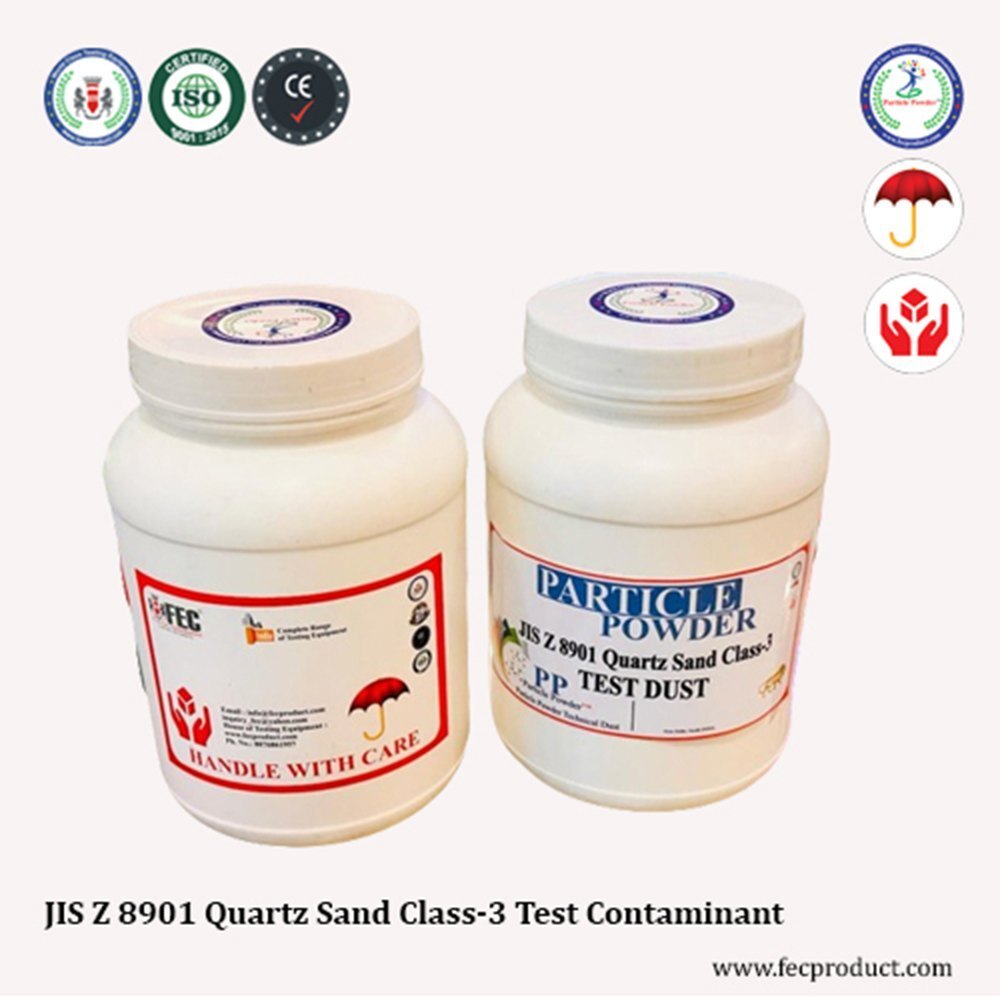
Tell us about your requirement

Price:
Quantity
Select Unit
- 50
- 100
- 200
- 250
- 500
- 1000+
Additional detail
Mobile number
Email

More Products in Technical Contaminant Particle Powder Category
A4 Ultrafine Test Contaminant Powder
Price 12000.0 INR / Piece
Minimum Order Quantity : 1 Piece
Appearance : Offwhite/grey fine powder
Type : Other, Ultrafine Test Contaminant Powder
Grade : Industrial/Technical
Packaging Type : Sealed HDPE Container
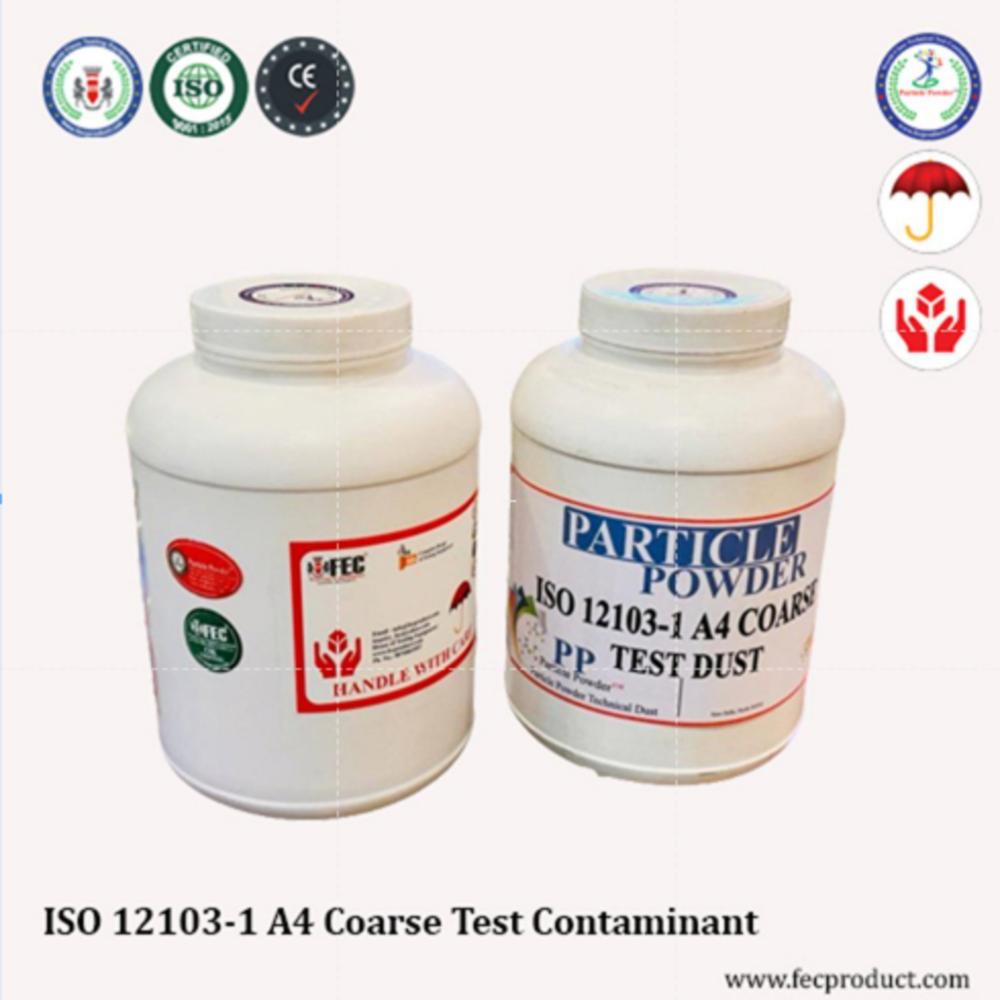
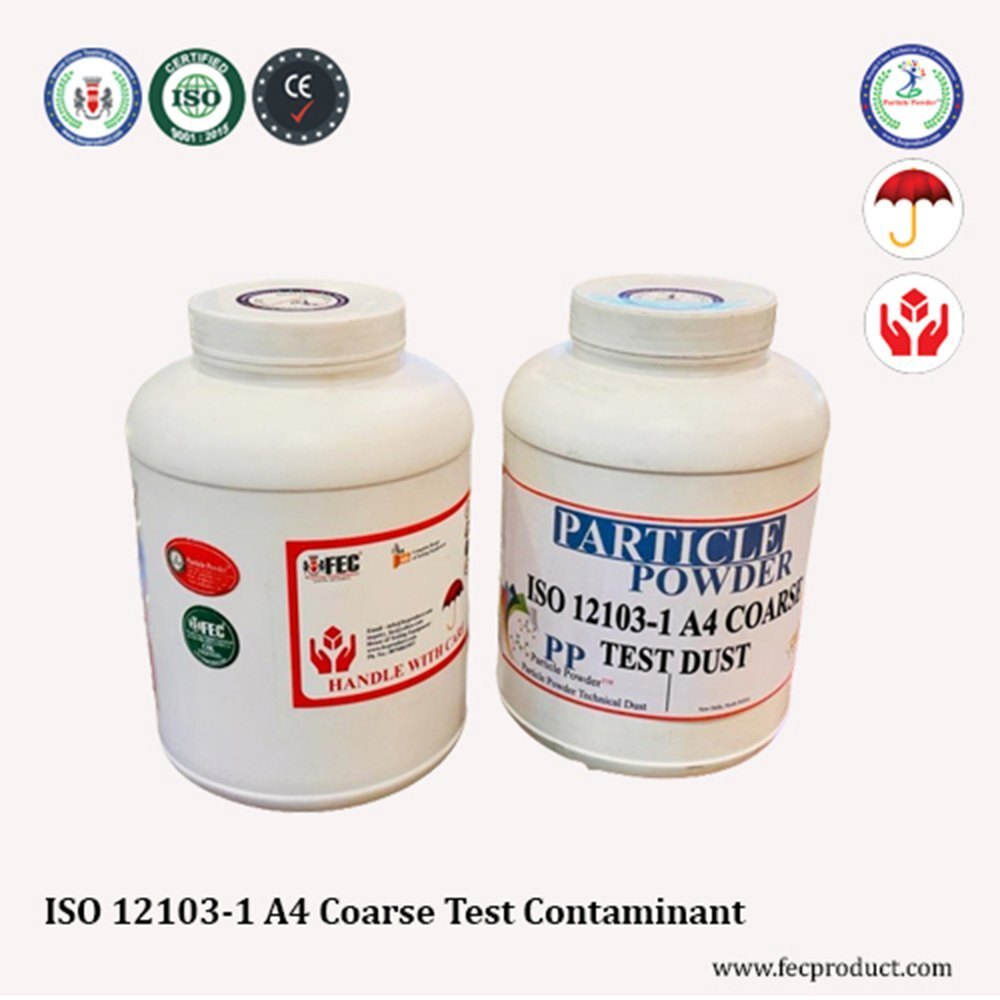
Test Dust ISO 12103-1 A4 Coarse
Price 14000.0 INR / kg
Minimum Order Quantity : 1 kg
Appearance : Grayish fine granular powder
Type : Technology Lab Chemicals
Grade : Industrial
Packaging Type : Polyethylene bottles or sealed containers
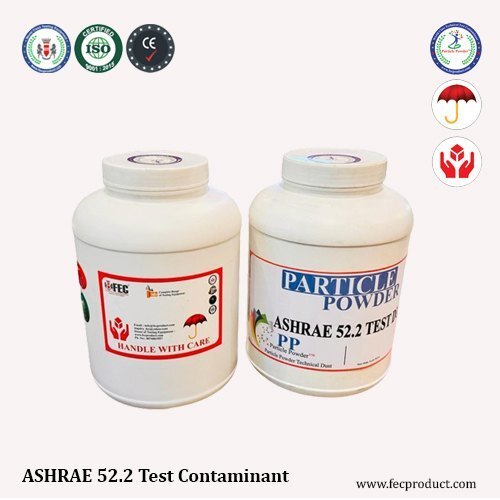
ASHRAE Test Dust
Price 12000.0 INR / Kilograms
Minimum Order Quantity : 1 Kilograms
Appearance : Fine Powder
Type : Other, Test Dust / Particle Powder
Grade : Laboratory Grade
Packaging Type : Plastic Bottle / Jar
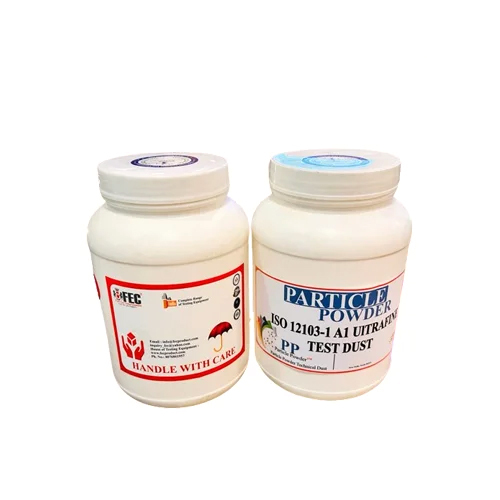
A1 Ultrafine Test Contaminant Powder
Price 12000.0 INR / Kilograms
Minimum Order Quantity : 1 Kilograms
Appearance : Ultrafine Particle Powder
Type : Other, Test Contaminant Powder
Grade : ISO 121031 A1 Ultrafine
Packaging Type : Sealed Plastic Container

 Send Inquiry
Our Products
- Technical Contaminant Particle Powder
- Deep Freezer
- Sample Gsm Cutter
- Particle Powder Technical Contaminant
- Air Filter and Cabin Test Equipment
- HVAC Air Filter Test Equipment
- Oil Filter Test Equipment
- Fuel Filter Test Equipment
- RO and Water Filter Test Equipment
- Filtration Media Test Equipment
- Face Mask Test Equipment
- Automobile Paint And Plating Equipment
- Environmental Chambers
- Paper Packaging Test Equipment
- Footwear And Rubber Test Equipment
- Radiator And Puff Panel Test Equipment
- Humidity Chamber
- Smoke Density Tester
- Analytical Balance

Plot No-35, K-1 Extn., Bank Wali Gali Gurudwara Road, Mohan Garden, Uttam Nagar,New Delhi - 110059, India

Mr T.P. P. Saxena
(Proprietor)
Mobile :08071780022
 Send Inquiry
 Call Me Free
Developed and Managed by Infocom Network Private Limited.
