
Call us now :08071780022
 Send Inquiry
 Send Inquiry
JIS Z Class 5 Fly Ash
Price 12000.0 INR/ Piece
MOQ : 1 Piece
JIS Z Class 5 Fly Ash Specification
- Usage
- Lab Test Dust for Air Filter and Particle Examination
- Storage Instructions
- Store in tightly sealed containers in a dry, cool place
- Physical State
- Powder
- Packaging Type
- HDPE Jar
- Grade
- JIS Z 8901 Class-5
- Type
- Fly Ash Test Dust
- Application
- Testing Contaminant for Particle and Filtration Testing as per JIS Z 8901
- Appearance
- Fine Particle Powder
- Handling Precaution
- Use Appropriate PPE, Handle with Care
- Test Purpose
- Simulates Real-World Dust Environments for Testing Filtration Equipment
- Hazardous Nature
- Non-Hazardous
- Standard Reference
- JIS Z 8901 Specification
- Form
- Synthetic Test Dust
- Color
- Light Grey
JIS Z Class 5 Fly Ash About
JIS Z 8901 Class 5 Fly Ash Test Dust is a standardized, lab-grade dust designed to simulate real-world paretic urate contamination from combustion processes, especially in power and industrial sectors. Class 5 represents a coarser version of fly ashdust, with a broader particle size distribution than Class 10, making it suitable for durability, clogging, and ingress testing in hars hensironments.
Composed mainly of silica, alumina, and iron oxide, this dust is stable, flowable, and compliant with JIS Z 8901 Class 5specifications.
Test Powder Class 4 and Class 9 The quality of test powders class 4 and class 9 (Talc) shall conform to the following items .Particle Density : Particle density shall be the value of 2.7 g/cm3 to 2.9 g/cm3 when measured according to the method in test.
FAQs
Q: What are Japanese Industrial Standard test powders used for?
A: They are used in dust separation tests, air filter function tests, wear tests, and other industrial evaluations.
Q: What is the specified particle density for Class 4 and Class 9 test powders?
A: The particle density must be within the range of 2.7 g/cm to 2.9 g/cm, measured according to the designated method.
Q: Can these test powders be used for calibrating automatic particle counters?
A: Yes, these test particles are suitable for calibrating light-scattering automatic particle counters and evaluating high-performance air filters.
Q: What standards do Class 4 and Class 9 powders conform to?
A: They conform to Japanese Industrial Standards, ensuring accuracy and reliability for various testing applications.
Q: Are there specific industries where these powders are essential?
A: Yes, they are widely used in industries such as air filtration, automotive testing, environmental monitoring, and laboratory research.
Exceptional Purity for Reliable Results
With a 99% purity level, JIS Z 8901 Class 5 Fly Ash provides consistently high-quality performance in industrial and laboratory testing. Its purity ensures accuracy and reproducibility of results, making it a preferred choice for stringent analytical and quality control processes.
Long Shelf Life with Proper Storage
This fly ash remains stable over extended periods if stored under dry, sealed conditions. Proper handling helps preserve its integrity, ensuring the product is always ready for use in demanding test environments or extended research projects.
FAQ's of JIS Z 8901 Class 5 Fly Ash:
Q: How is JIS Z 8901 Class 5 Fly Ash typically used in industrial testing?
A: JIS Z 8901 Class 5 Fly Ash is primarily used in industrial labs for material testing, quality control, and research analysis. Its high purity enables accurate measurement of physical and chemical properties in construction materials, coatings, and other industrial products.Q: What makes JIS Z 8901 Class 5 Fly Ash suitable for laboratory applications?
A: The product's 99% purity ensures minimal interference from contaminants, making it highly suitable for laboratory experiments that require precise chemical composition and reliable data.Q: When is the best time to use this fly ash after purchase?
A: It is recommended to use the fly ash while it is still within its stable shelf life, by storing it in dry, sealed conditions. This maintains its purity and effectiveness for all intended applications.Q: Where should JIS Z 8901 Class 5 Fly Ash be stored to maintain quality?
A: For optimal shelf life and to preserve its high purity, the fly ash should be kept in a dry, airtight container, away from moisture and direct sunlight, in a controlled storage environment.Q: What is the manufacturing process for JIS Z 8901 Class 5 Fly Ash?
A: JIS Z 8901 Class 5 Fly Ash is produced through controlled combustion processes at power plants, followed by collection and purification steps to achieve high purity levels required for industrial and laboratory usage.Q: How does using high-purity fly ash benefit industrial testing?
A: Using fly ash with high purity minimizes variability and potential contamination in test results, contributing to accurate analysis and more reliable performance assessments of materials and products.Engineered for Precise Testing
Formulated as per the JIS Z 8901 specification, this synthetic fly ash test dust ensures consistency and repeatability in laboratory procedures. Its finely controlled particle size provides a reliable medium to assess filtration systems and particle retention capabilities under standardized conditions.
Safety and Handling Guidelines
Although classified as non-hazardous, handling JIS Z Class 5 Fly Ash requires wearing appropriate personal protective equipment (PPE) and exercising care. Proper storage in tightly sealed containers in a cool, dry place is recommended to maintain the dust's quality and prevent contamination.
FAQ's of JIS Z Class 5 Fly Ash:
Q: How should JIS Z Class 5 Fly Ash be used in filter testing laboratories?
A: JIS Z Class 5 Fly Ash is used by introducing it into test chambers to simulate dust-laden air, allowing for precise measurement of filtration efficiency and particulate capture as per JIS Z 8901 standards.Q: What precautions must be observed while handling this synthetic test dust?
A: Always use appropriate personal protective equipment (PPE), such as masks and gloves, and handle carefully to avoid spillage or dust generation, as recommended for laboratory powders.Q: When is it necessary to use JIS Z Class 5 Fly Ash in particle and filtration testing?
A: It is employed whenever simulation of real-world dust environments is required to evaluate or validate the performance of filtration equipment under standardized testing protocols.Q: Where should JIS Z Class 5 Fly Ash be stored to preserve its efficacy?
A: Store the fly ash powder in tightly sealed HDPE jars, placed in a dry and cool environment, away from direct sunlight and moisture, to maintain its physical properties.Q: What is the process for applying this test dust during lab examinations?
A: A measured amount of the powder is introduced into an air stream or dust chamber, and filtration equipment is assessed for particulate retention and air quality conformity based on JIS Z 8901 test methods.Q: What are the benefits of using JIS Z Class 5 Fly Ash for filtration equipment testing?
A: Using this standardized dust ensures reproducible, accurate testing results, facilitating product comparison, quality control, and regulatory compliance for manufacturers and research laboratories.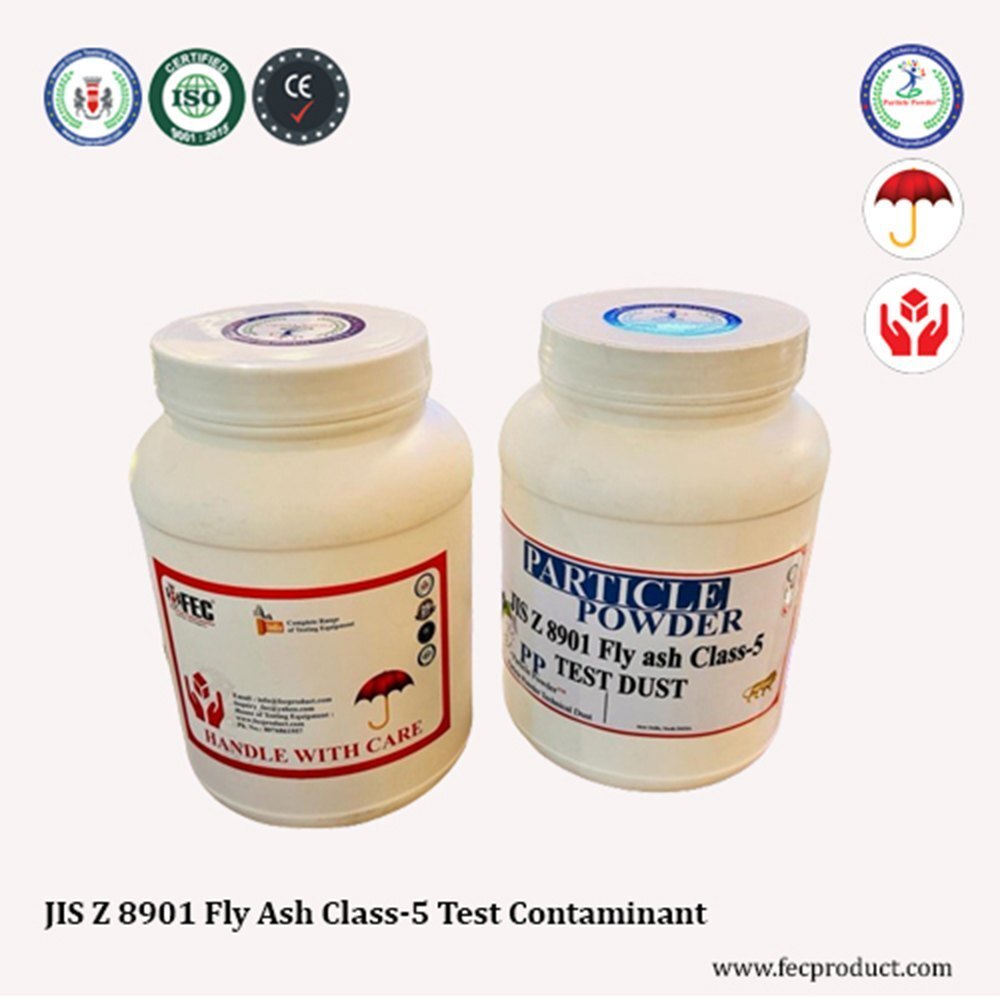
Tell us about your requirement

Price:
Quantity
Select Unit
- 50
- 100
- 200
- 250
- 500
- 1000+
Additional detail
Mobile number
Email

More Products in Technical Contaminant Particle Powder Category
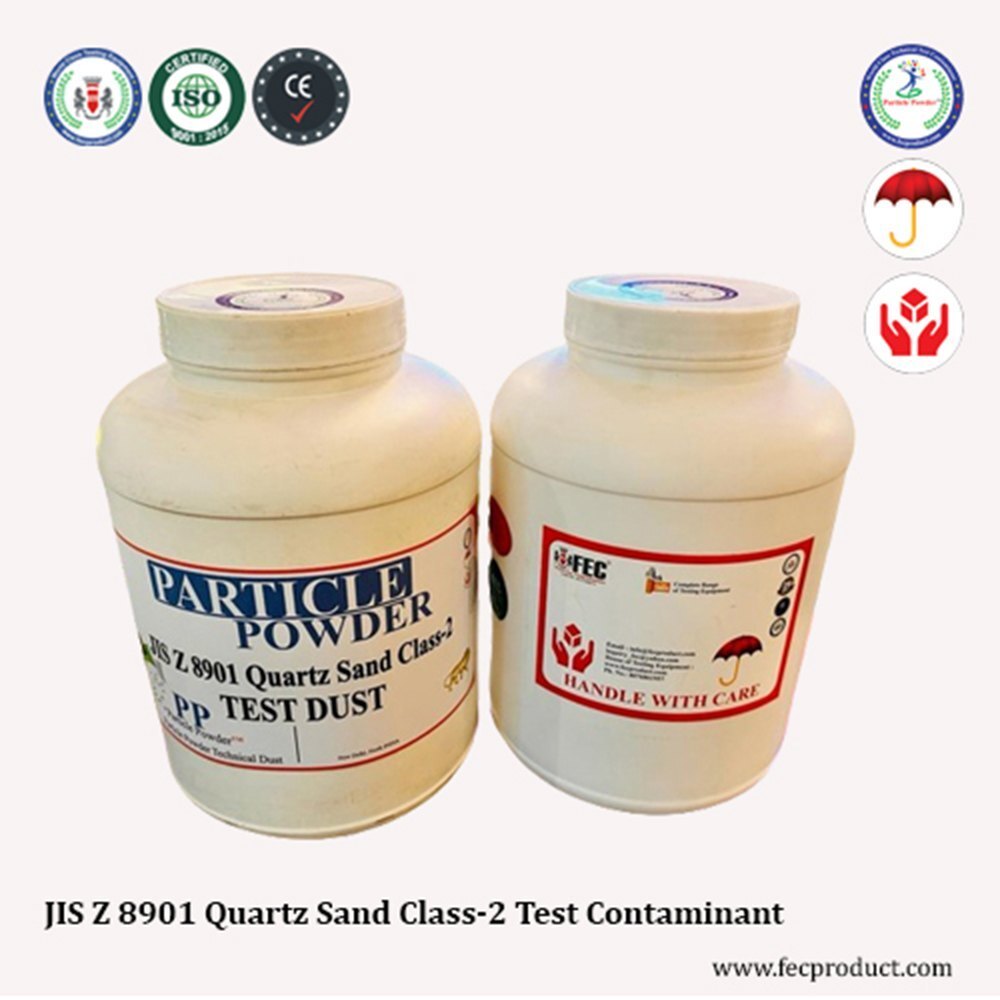
JIS Z 8901 Class 2 Quartz Sand
Price 14000.0 INR / Unit
Minimum Order Quantity : 10 Units
Type : Industrial Lab Chemicals
Grade : Laboratory
Appearance : Powder
Shelf Life : Stable under recommended storage conditions
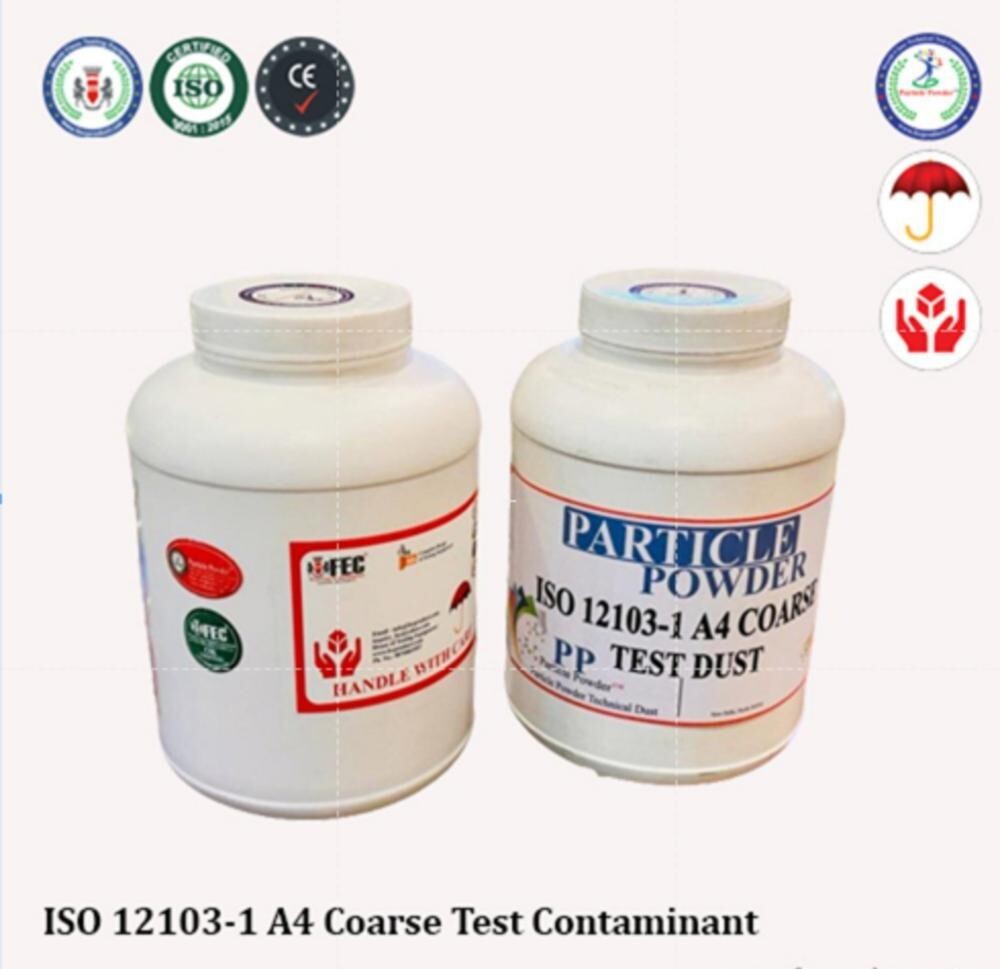
A4 Coarse Test Dust
Price 12000.0 INR / Piece
Minimum Order Quantity : 1 Piece
Type : Other
Grade : A4 Coarse
Appearance : Coarse Powder
Shelf Life : 2 years (under recommended storage conditions) Days
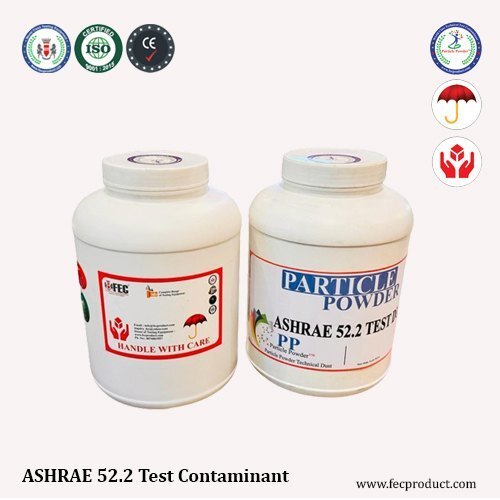
ASHRAE Test Dust
Price 12000.0 INR / Kilograms
Minimum Order Quantity : 1 Kilograms
Type : Other, Test Dust / Particle Powder
Grade : Laboratory Grade
Appearance : Fine Powder
Shelf Life : 12 months
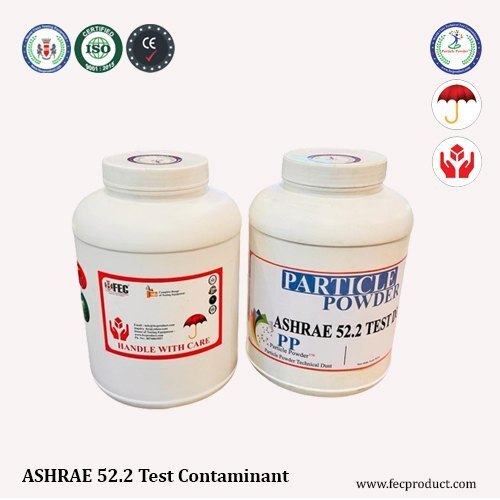
ASHRAE 52.2
Price 14000.0 INR / Kilograms
Minimum Order Quantity : 1 Kilograms
Type : Industrial Lab Chemicals
Grade : Laboratory
Appearance : Particle Powder
Shelf Life : Stable under dry, sealed storage conditions

 Send Inquiry
Our Products
- Technical Contaminant Particle Powder
- Deep Freezer
- Sample Gsm Cutter
- Particle Powder Technical Contaminant
- Air Filter and Cabin Test Equipment
- HVAC Air Filter Test Equipment
- Oil Filter Test Equipment
- Fuel Filter Test Equipment
- RO and Water Filter Test Equipment
- Filtration Media Test Equipment
- Face Mask Test Equipment
- Automobile Paint And Plating Equipment
- Environmental Chambers
- Paper Packaging Test Equipment
- Footwear And Rubber Test Equipment
- Radiator And Puff Panel Test Equipment
- Humidity Chamber
- Smoke Density Tester
- Analytical Balance

Plot No-35, K-1 Extn., Bank Wali Gali Gurudwara Road, Mohan Garden, Uttam Nagar,New Delhi - 110059, India

Mr T.P. P. Saxena
(Proprietor)
Mobile :08071780022
 Send Inquiry
 Call Me Free
Developed and Managed by Infocom Network Private Limited.
